

Sexual Abuse and Assault Injury Lawyers


Diocese of Saginaw Sexual Abuse Allegations
The Saginaw Diocese, a prominent institution in Michigan’s Great Lakes Bay Region, has long been a beacon of faith and service within the Catholic community. Its history, deeply tied to the spiritual and cultural development of the area, has been overshadowed in recent years by troubling allegations of sexual abuse involving clergy members.
The Diocese of Saginaw sexual abuse allegations not only raise questions about the diocese’s past but also have broader implications for accountability and justice within the Catholic Church. Survivors have come forward with courageous accounts of abuse, challenging the institution to confront its systemic failures and take meaningful steps toward reform.
A Michigan clergy abuse lawyer from Injury Lawyer Team can help survivors in their pursuit of justice, offering a path forward for those seeking compensation and healing.
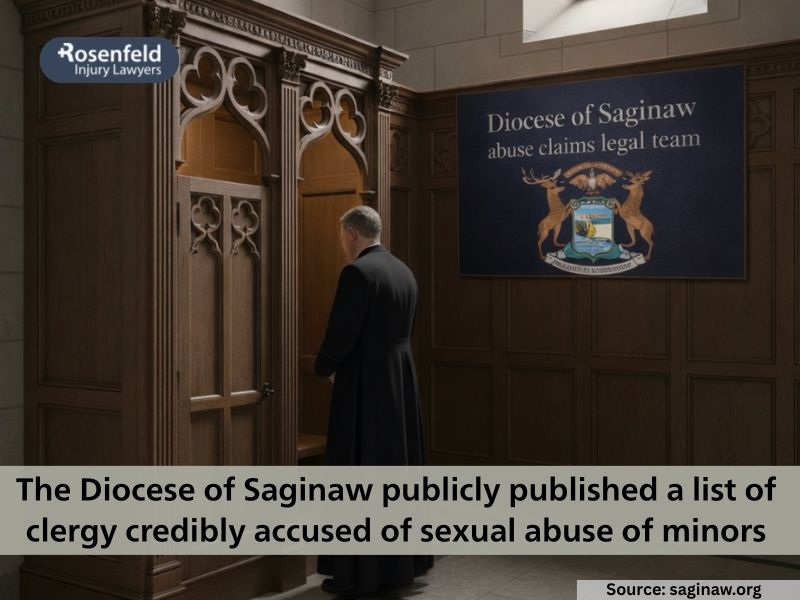
Background and Influence of the Catholic Diocese of Saginaw
Established in 1938, the Diocese of Saginaw spans eleven counties in Michigan’s Great Lakes Bay Region. Through its network of parishes, schools, and community programs, it serves tens of thousands of Catholics. Rooted in traditions of faith and service, the diocese has significantly shaped the region’s spiritual and social fabric.
The diocese’s leadership, from its founding bishops to its current shepherd, Bishop Robert D. Gruss, has been instrumental in promoting Catholic values and outreach efforts.
However, its historical significance is now entwined with the allegations of abuse that have surfaced in recent years. Prominent clergy members accused of misconduct have included those who held positions of influence within the diocese, further highlighting systemic failings.
Child Sexual Abuse Allegations Within the Saginaw Diocese
The Diocese of Saginaw has faced numerous allegations of sexual abuse by clergy members, with cases highlighting both individual misconduct and systemic failures. Survivors have shared accounts of abuse that span decades, involving priests who exploited positions of trust within parishes, schools, and youth programs.
A high-profile case involved Father Robert DeLand, a senior priest and judicial vicar for the diocese, with allegations ofsexual abuse stretching back nearly three decades, all of which involved survivors who were minors at the time. Victims described being groomed during counseling sessions, with incidents occurring in the rectory and other diocesan properties.
Another case involves Rev. Msgr. Timothy H. Desrochers. In 2003, a man in his 20s reported that during confession, Fr. Timothy Desrochers hugged and inappropriately touched him. Desrochers allegedly admitted to struggling with similar behavior and claimed there had been other victims.
In 2007, the Diocese received nude photos of Desrochers posted on a website for older men seeking younger partners. He admitted to posting the photos, claiming it was “not a big deal.” The incident led to his removal from priestly ministry via a decree from Bishop Alexander Sample.
In 2011, Desrochers was implicated in a scandal involving a recorded phone call with a prisoner. During the call, Desrochers allegedly solicited sexual favors in exchange for advocacy at the prisoner’s sentencing hearing.
Clergy Members Accused of Sexual Abuse of a Minor in the Diocese of Saginaw
The list of Michigan clergy accused of abuse in the Saginaw Diocese includes:
- Fr. Robert DeLand, Jr.
- Fr. Ronald J. Dombrowski
- Deacon Richard L. Howard (who taught at All Saints High School in Bay City)
- Fr. Martin Ignatius Kalahar
- Fr. Dennis Kucharczyk
- Fr. Jack J. Leipert (who was publicly named by Saginaw Bishop Joseph Cistone)
- Fr. James Andrew Marron
- Fr. Francis McHugh
- Fr. James Aloysius Mulvey
- Fr. Neil Francis O’Connor
- Fr. John Steven Rabideau
- Fr. Thomas William Ryan
- Fr. Elmer Stoffel
- Fr. Richard T. Szafranski
- Fr. Joseph Szarek
- Fr. Leonard F. Wilkuski
Michigan Attorney General’s Office Investigations into the Diocese of Saginaw
Following the statewide investigation launched by the Michigan Attorney General’s Office in 2018, several cases involving clergy in the Diocese of Saginaw were uncovered.
That same year, DeLand was arrested and later convicted of criminal sexual conduct and gross indecency involving young men he encountered through his ministry.
After a series of legal proceedings, Father DeLand pleaded no contest to all the charges. In April 2019, Saginaw County Chief Circuit Court Judge Darnell Jackson sentenced him to up to 15 years in prison, but he was paroled later in 2021.
The Catholic Diocese’s Role in Enabling Clergy Abuse or Cover-Ups
The Diocese of Saginaw has faced significant criticism for its role in enabling and covering up abuse, with systemic failures documented in investigations and survivor accounts.
- Delayed Action Against Accused Clergy: In cases like Father Timothy Desrochers, the diocese acted only after multiple allegations and scandals, including explicit evidence of misconduct, became public. This pattern of reactive rather than proactive measures allowed abuse to persist.
- Lack of Transparency: Survivors and their families have reported frustration with the diocese’s opaque handling of abuse complaints. In some cases, allegations were dismissed or minimized without thorough investigation, leaving victims unsupported.
- Reassignments of Clergy: Similar to patterns seen in other dioceses, accused priests were often reassigned to new parishes rather than permanently removed from ministry, exposing more parishioners to potential harm.
- Failure to Report to Authorities: The Michigan Attorney General’s investigation revealed instances where abuse allegations were not promptly reported to civil authorities, violating both ethical and legal obligations.
These actions reflect systemic failings that allowed abuse to proliferate within the Diocese of Saginaw. Survivors and advocates continue to call for meaningful reforms, including independent oversight and greater transparency, to prevent future harm and rebuild trust.
Legal Options for Survivors of Abuse Within the Diocese of Saginaw
Survivors of clergy abuse within the Diocese of Saginaw have both criminal and civil avenues to seek justice and hold abusers accountable.
They can report abuse to law enforcement, potentially leading to charges against offenders. Although statutes of limitations may apply, recent reforms in some jurisdictions have extended or removed these limits for child sexual abuse cases.
Survivors can also file lawsuits against individual clergy members and the diocese for damages related to their abuse. These cases often address the diocese’s negligence in failing to prevent or address abuse.
Finally, many dioceses, including Saginaw, have established compensation programs for survivors. These programs often include financial settlements and access to counseling services.
How Injury Lawyer Team Can Help
The clergy abuse attorneys at Injury Lawyer Team bring extensive experience helping survivors of abuse within the Diocese of Saginaw and beyond. Our team understands the profound emotional and legal complexities of these cases and provides compassionate, skilled advocacy tailored to each survivor’s needs.
By conducting thorough investigations and leveraging our expertise in clergy abuse claims, we ensure survivors’ stories are heard and justice is pursued. Whether through civil litigation, settlement negotiations, or support throughout the legal process, our experienced attorneys are committed to securing accountability and compensation for their clients.
We represent victims of clergy abuse within the:
- Archdiocese of Detroit
- Diocese of Grand Rapids
- Diocese of Kalamazoo
- Diocese of Marquette
- Diocese of Gaylord
- Diocese of Lansing
How Long Do Victims Have to Take Legal Action for Sexual Misconduct in the Saginaw Diocese?
Survivors of child sexual abuse and clergy abuse in the Catholic Diocese of Saginaw have specific legal time limits (known as statutes of limitations) for filing civil claims or pursuing criminal charges. These timeframes depend on several factors, including the survivor’s age at the time of the abuse and when the abuse was discovered or reported.
Under Michigan law, individuals who were under the age of 18 at the time of the abuse of a minor generally have until their 28th birthday to file a civil claim related to sexual abuse. Alternatively, they may file within three years of discovering the abuse, whichever is later.
This aligns with MCL 600.5851b, which was updated in recent years to give survivors more time to seek justice, particularly in cases involving pastors and other authority figures.
When it comes to criminal charges, Michigan allows prosecutors to file criminal charges at any time for first-degree criminal sexual conduct involving a child under 18. This means that someone accused of sexual abuse can still face prosecution decades after the incident, especially in cases involving clergy. For other types of sexual misconduct, charges may need to be filed within 10 to 15 years, depending on the specific crime and evidence.
The Attorney General’s office has played a critical role in uncovering patterns of clergy abuse in Michigan. Since launching its investigation into the Catholic Diocese of Saginaw and other regions, the attorney general’s team has reviewed thousands of documents and pursued criminal charges where possible. Their findings include credible allegations against multiple clergy members, many of whom were accused of sexual abuse over several decades.
In the Diocese of Saginaw specifically, multiple priests associated with the Catholic Diocese of Saginaw have been removed from public ministry or listed as credibly accused. Survivors who were part of parishes such as Holy Family Parish, Stanislaus Kostka Parish, or Joseph Parish may still have legal options, even if the abuse occurred years ago.
It’s important for survivors to consult legal professionals who understand both Michigan law and the broader context of clergy abuse cases. Survivors can also reach out to a victim assistance coordinator or contact local law enforcement to begin the process of reporting past abuse. Agencies like the Michigan Department of Health and Human Services may also be involved in support and investigation efforts.
If you or someone you know suffered sexual abuse by a Catholic priest or other clergy members affiliated with the Catholic Diocese of Saginaw, know that time may still be on your side. Both civil and criminal avenues may remain open, depending on your situation.
Secure Expert Legal Counsel Today!
If you or someone you know has experienced abuse within the Diocese of Saginaw, Injury Lawyer Team is here to provide the support and legal expertise you need. We understand the pain, confusion, and fear that often accompany such experiences, and we are committed to helping survivors find their voices and seek justice.
Our team offers free, confidential consultations to listen to your story, answer your questions, and explore your legal options.
There are no upfront fees. Our firm operates on a contingency fee basis, meaning you only pay if we successfully resolve your case. This ensures that financial concerns never prevent you from pursuing the accountability and compensation you deserve.
Fill out our contact form to schedule a free consultation with a clergy sexual abuse lawyer.
All content undergoes thorough legal review by experienced attorneys, including Jonathan Rosenfeld. With 25 years of experience in personal injury law and over 100 years of combined legal expertise within our team, we ensure that every article is legally accurate, compliant, and reflects current legal standards.