

Sexual Abuse and Assault Injury Lawyers


Maryland Youth Detention Sexual Abuse Lawsuit
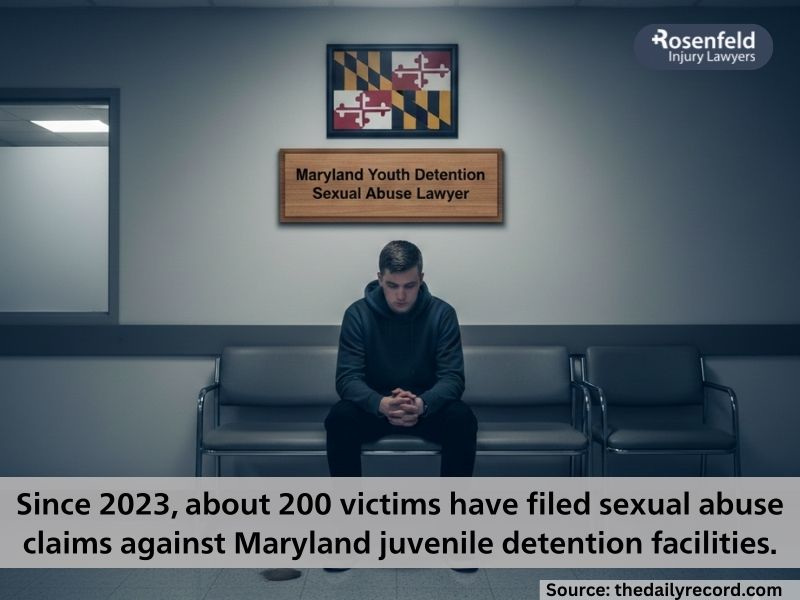
Sexual abuse is a recurring problem in Maryland’s youth detention centers, where rampant abuse and a pervasive culture of sexual abuse have been documented for decades. Facilities like Waxter Children’s Center have become notorious for widespread misconduct, including sexual abuse of female juvenile offenders. These allegations have resulted in many Maryland Youth Detention sexual abuse lawsuits.
With so many young and potentially vulnerable people under tight control by the state, there is an elevated chance that some of them will be sexually abused while in the facility. Victims may be eligible to file a Maryland Youth Detention sexual abuse lawsuit.
Investigations have revealed that officers and the institutions involved often fostered a culture of indifference and impunity, with staff frequently failing to protect children from abuse.
The state department has faced criticism for inadequate oversight, while the Maryland Attorney General’s Office is representing the state in many child sexual abuse lawsuits, resulting in massive liability for Maryland.
Since the Child Victims Act of 2023 took effect, over 3,500 sex abuse lawsuits have been filed against Maryland state agencies, exposing systemic failures and years of trauma for survivors of abuse in facilities.
Unfortunately, this appears to be more common than previously thought, and addressing the issues in Maryland juvenile detention centers will likely take time. Thankfully, more victims are coming forward about being sexually abused in juvenile detention centers, and Injury Lawyer Team offers a free consultation to help abuse survivors take action to hold their abusers accountable.
Why Choose Injury Lawyer Team
Injury Lawyer Team is a personal injury law firm that has a dedicated team of legal experts handling cases of sexual abuse in Maryland juvenile detention centers. Our focus is on helping you secure the largest possible settlement through a civil claim so you can use it to cover the costs of your recovery.
Affording support resources like medical bills and therapy costs can be a burden for child sexual abuse survivors, which is why we work hard to make sure that your settlement can more than cover the costs of your recovery.
We have extensive experience helping child sexual abuse victims build cases and file claims. These sensitive cases require a level of compassion, discretion, and finesse that takes a long time to develop. We guide our clients through legal actions, helping them understand their rights and options at every step.
Counseling services and support groups are also available to provide emotional support and help child sexual abuse survivors understand their rights during the legal process.
One factor that makes our law firm a top option is our nationwide representation, which is available to help you pursue legal action in multiple states. Even though you may have experienced child sexual abuse in Maryland juvenile detention centers, we can help you get financial compensation no matter where you are now.
Finally, confidentiality is a top priority in how we handle cases, and every case receives the personal attention and sensitivity it deserves. We offer a confidential consultation to discuss your situation privately and without obligation.
Taking advantage of a confidential consultation today is a critical step for survivors seeking justice or financial compensation. Our mission is to help protect children by ensuring that perpetrators and institutions are held accountable for child sexual abuse.
What is Child Sexual Abuse in Maryland Juvenile Detention Centers?
Juvenile facilities, including detention centers, inherently put inmates at risk for sexual abuse because of the power dynamic between the staff and the victims. In such a facility, staff have full control. Victims are isolated from outside authorities and are not likely to be believed when they try to report a problem.
The state’s juvenile justice system and governments are responsible for oversight and accountability in these cases, and both public and private institutions, including private contractors, can be involved in abuse cases.
Survivors of child sexual abuse in juvenile detention centers often face significant emotional and psychological barriers to reporting their abuse. Many sexually abused survivors have reported feeling silenced and unsupported when they attempted to speak out, with their complaints often ignored or dismissed by facility staff.
All of these factors, alongside the inmates’ dependence on staff, mean that some staff members can try to abuse victims with a limited chance of being caught.
In some cases, abusers are protected by the correctional facility they work in, which is interested in protecting its reputation and maintaining control. In other cases, staff members are not monitored thoroughly, making it easier to commit sexual abuse with little fear of being caught.
A new Maryland law called the Child Victims Act lets sexually abused victims file sexual abuse lawsuits in state court to hold abusers accountable.
We represent survivors from all Maryland youth center facilities under the jurisdiction of the Department of Juvenile Services:
Alfred D. Noyes Children’s Center
9925 Blackwell Rd
Rockville, MD 20850
301-762-7800
Backbone Mountain Youth Center
124 Camp 4 Rd
Swanton, MD 21561
301-359-9190
Baltimore City Juvenile Justice Center
300 N Gay St
Baltimore, MD 21202
443-263-8706
Charles H. Hickey, Jr. School
9700 Old Harford Rd
Baltimore, MD 21234
410-663-7601
Cheltenham Youth Detention Center
11003 Frank Tippett Rd
Cheltenham, MD 20623
301-782-2400
Garrett Children’s Center
164 Freedom Lane
Lonaconing, MD 21539
301-463-2244
Green Ridge Youth Center
15 Mile Creek Rd
Flintstone, MD 21530
301-478-2930
Lower Eastern Shore Children’s Center
405 W Naylor Mill Rd
Salisbury, MD 21801
410-548-4850
Victor Cullen Center
6000 Cullen Drive
Sabillasville, MD 21780
301-739-8122
Western Maryland Children’s Center
18420 Roxbury Rd
Hagerstown, MD 21740
301-745-6021
A Maryland youth detention center sexual abuse lawyer from our team can also help with cases related to county juvenile hall centers, such as:
Meadow Mountain Youth Center (Garrett County)
234 Recovery Rd
Grantsville, MD 21536
301-895-5669
Savage Mountain Youth Center (Garrett County)
164 Freedom Ln
Lonaconing, MD 21539
301-463-2244
J. DeWeese Carter Youth Facility (Kent County)
300 Scheeler Road PO Box 229
Chestertown, MD 21620
410-778-6444
Thomas J. S. Waxter Center (Anne Arundel County)
375 Red Clay Rd
Laurel, MD 20724
301-362-6160
The Waxter Children’s Center is notorious for its history of abuse, including sexual misconduct. It became infamous as a site where female juvenile offenders suffered widespread mistreatment.
What Are the Most Common Forms of Maryland Juvenile Detention Center Abuse?
One of the difficulties of handling sexual abuse cases is dealing with the different types of misconduct, including misconduct by correctional officers, which is a significant issue. Abuse can take several forms and is always intended to be secret.
All allegations of sexual abuse are immediately referred for investigation to Child Protective Services, the DJS Office of the Inspector General (OIG), and law enforcement, and staff are legally obligated to report any suspected incidents of sexual abuse or harassment to these authorities. Allegations are referred for criminal and administrative investigations conducted by specialized investigators trained in accordance with national guidelines.
DJS provides ongoing staff training on professionalism and reporting, and management reviews investigation outcomes to enforce accountability. Facilities are required to have documented staffing and supervision plans that align with DJS policies to prevent sexual abuse and harassment.
Facilities also undergo regular federal PREA audits to ensure compliance, and recent audits have confirmed compliance with all 43 PREA standards.
Rape
Rape is forcing sexual intercourse with inmates against their will in juvenile detention facilities. The combination of isolation and staff members being in a position of power can lead to opportunities for rape without being caught. Other detainees can even rape some sexually abused youths if they are not receiving the right level of supervision.
Sexual Abuse
The age of legal consent in Maryland is 16. However, juvenile offenders in detention facilities cannot provide legal consent. Any sexual contact is considered sexual abuse. New legislation called the Maryland Child Victims Act can help victims seek justice against juvenile facilities, even if the abuse occurred years ago.
Sexual Assault
Sexual assault is forcing juvenile detention facility inmates to participate in sexual activity against their will. This can include a variety of physical and sexual acts that are both nonconsensual and unwanted. Sexual assault is used as a means of hurting victims, which can be used as retaliation, a form of control, or to force silence about illegal actions.
Sexual Victimization
Juvenile detention center inmates can be exposed to a variety of acts of a sexual nature, which makes them victims. When this happens repeatedly as a means of intimidation, mental abuse, or control, it becomes sexual victimization.
This is often used as a means of exerting power over victims, either to force compliance or to keep them quiet about any other illegal actions that are happening in the juvenile detention facility.
Touching or physical contact that is sexual in nature is considered inappropriate. This is especially true given that the majority of victims are underage, making it a form of child sexual abuse. Unfortunately, inappropriate sexual contact can happen quickly and go largely unnoticed in juvenile detention facilities with a lot of people and limited oversight by outside authorities.
Physical Abuse
Guards and other inmates can use physical violence as a means of intimidation and control. It is not uncommon to find cases of sexual abuse that also include physical violence.
Who is Eligible to File a Maryland Juvenile Detention Center Sexual Abuse Claim?
Anyone who was incarcerated in a juvenile detention center and was sexually abused while in that center can file a civil claim.
In many cases, this means that the abuse was committed by a staff member of the facility, another inmate, or even auxiliary staff not related to the facility, such as outside therapists brought in to treat patients on-site. As long as the abuse occurred while you were in the facility, you can seek justice through legal means.
The Maryland Child Victims Act of 2023 allows survivors of childhood sexual abuse to file sex abuse lawsuits against both public and private entities, including schools and religious institutions. Survivors of sexual abuse in Maryland juvenile detention centers are encouraged to file their claims quickly due to potential legislative changes that may limit their rights.
Generally, victims may file a sex abuse lawsuit once they turn 18 and reach the age of majority under Maryland law. However, parents and legal guardians are able to file a sex abuse lawsuit on behalf of their children when they are still minors.
As experienced attorneys, we understand how heartbreaking working with child victims can be. However, our team will work with you to understand applicable laws, including the Maryland Child Victims Act. We can help parents of child victims learn more about when the abuse occurred and how to get justice with a civil lawsuit.
What Laws Govern Maryland Youth Detention Sexual Abuse Cases?
In 2023, Maryland lawmakers passed the Maryland Child Victims Act, a new Maryland law that eliminates the statute of limitations for childhood sexual abuse cases. The Child Victims Act eliminates previous time limits, allowing sex abuse survivors to file civil lawsuits regardless of when the abuse occurred.
The Maryland Child Victims Act of 2023 was signed into law by Governor Moore on April 11, 2023, to provide hope and justice for survivors of institutional sexual abuse. The Maryland Supreme Court upheld the Act’s constitutionality, allowing sex abuse survivors to seek accountability through a civil lawsuit without time limits.
Under the Child Victims Act, survivors can file lawsuits and seek damages of up to $890,000 per occurrence of abuse, with the cap reduced to $400,000 for claims filed after mid-2025. Maryland lawmakers are considering changes to the Act that could further cap damages and limit the number of sex abuse claims that can be filed.
The state of Maryland is also negotiating settlements outside of court for the thousands of civil lawsuits filed under the Act. Since the Act took effect, over 3,500 lawsuits have been filed against state agencies alleging sex abuse in juvenile detention facilities, creating a huge liability for the state.
Prior to this, sex abuse victims could only file claims within three years of being abused or within three years of becoming an adult in cases involving minors. This often created problems for victims, as most former inmates take a very long time to come forward about their abuse and would miss their opportunity to file sex abuse lawsuits.
In response, Maryland changed the law so that the statute of limitations no longer applies to victims of child sexual abuse. Under the Maryland Child Victims Act, sex abuse victims can come forward and pursue legal action at any time, which raises their chances to come forward when they get older and can overcome the trauma enough to decide on what they want to do legally.
Maryland’s Child Victims Act is similar to other state and federal laws that were passed when allegations of widespread abuse by the Catholic Church were proven accurate. Many states, including Maryland, passed laws to extend or eliminate the statute of limitations on sexual abuse entirely for the child victims of the Church.
The large number of lawsuits against juvenile hall facilities, such as the Cheltenham Youth Detention Center, has led to significant pending litigation in both state and federal courts, with courts facing procedural delays and backlogs as they work to handle the volume of cases and the complex legal issues involved.
In both types of cases, sexual abuse survivors are given a more appropriate window of opportunity to file a civil lawsuit based on what is known about childhood abuse, trauma, and recovery.
We offer a free consultation to help you learn more about how to hold juvenile hall accountable. Our lawyers can help you learn more about Maryland law and your legal options, such as filing a civil claim.
How Can Maryland Juvenile Detention Center Abuse Lawyers Help?
The team at Injury Lawyer Team is prepared to help you pursue legal action against the Maryland juvenile detention center responsible for your sexual assault. The legal process for juvenile hall cases can be complex, but our firm guides clients through each step to ensure their rights are protected. We assist survivors in pursuing a legal claim to pursue compensation and hold institutions accountable for abuse.
Several safeguards protect youth in Maryland detention centers. Youth have guaranteed private access to victim advocates, attorneys, and parents while in DJS facilities. They can report sexual abuse using at least two internal and one external confidential reporting methods, including anonymous options and the 211 Maryland hotline.
Upon admission to juvenile hall, youth are trained on the zero-tolerance policy for sexual abuse and receive informational pamphlets explaining how to report incidents. Maryland imposes no time limit on when a youth may submit a grievance regarding sexual abuse within the juvenile hall facility.
Every youth is screened using an objective tool within 72 hours of intake at a juvenile hall facility to identify risks for victimization or potential for sexual abusiveness, with reassessments occurring at least every 60 days.
Maryland’s juvenile hall policies are based on a zero-tolerance approach and strict adherence to the federal Prison Rape Elimination Act (PREA) standards, with the Maryland Department of Juvenile Services overseeing these measures.
Free Consultation
The first step to file lawsuits as a way to pursue justice for sexual abuse in a juvenile hall facility is to schedule a completely confidential case evaluation with our legal team. We will discuss what happened and your potential sexual abuse case to provide you with information about your legal options for moving forward with civil claims for a fair settlement.
Gathering Evidence
To move forward with filing your juvenile hall lawsuit, we will need to gather evidence and build your case. The more time that passes between your sexual abuse and when you file a civil lawsuit, the more challenging it can be to find evidence. We must preserve everything we can, from witness testimony to juvenile hall video surveillance footage, to help you pursue compensation for the abuse.
Filing a Lawsuit
We help our clients file civil lawsuits based on negligence and duty of care. Unlike criminal proceedings handled by the government, which state or federal prosecutors pursue, we aren’t seeking jail time. We are seeking compensation for the abuse that happened to you.
There can be a civil lawsuit and a criminal lawsuit against the same person or entity at the same time. Our legal team will handle the filing of your juvenile hall civil lawsuit on your behalf. We will keep you informed of the entire process as it unfolds.
Negotiating a Juvenile Hall Settlement
In many cases, we can negotiate a settlement with the other party without going to court. If this is possible, we often prioritize this approach as it can save time and money.
The facilities involved in a lawsuit—whether state-run or private—can significantly affect settlement size, with claims against private institutions often resulting in higher settlement amounts than those against the state.
Many lawsuits against Maryland’s juvenile detention centers are based on substantial evidence, including security footage and internal investigations. It takes time to get on the court schedule, and court fees are higher. Settling outside of court is also good in preventing the victim from having to testify to their experiences of sexual abuse.
Going to Trial
If a juvenile hall settlement isn’t possible, our team is prepared to take your case to trial, where we will continue to fight for your legal rights.
What Type of Compensation Can Victims Recover for Youth Detention Facility Sexual Abuse?
Different types of damages can be requested in sexual abuse claims. These include:
- Medical treatment costs
- Therapy costs
- Property damage
- Pain and suffering
- Emotional distress
What Factors Affect Settlement Amounts?
Some factors can influence the size of your settlement. This includes how long the sexual abuse occurred, the severity of the abuse, and how it has impacted your life over the long term.
The involvement of local governments or private institutions that operate juvenile detention centers can also affect settlement amounts, as different caps and policies may apply based on the institutions.
Generally, the more severe and devastating the effects of sexual abuse at juvenile hall, the more financial compensation you can expect to receive.
Contact Us For a Free Consultation
Injury Lawyer Team are dedicated to representing survivors of juvenile detention center sexual abuse in civil lawsuitsunder Maryland Law. Let us help you file a lawsuit to seek justice and recover financial compensation from the Maryland DJS.
The new law eliminates the previous time limits, ensuring that those who experienced abuse can seek justice and that abusers are held accountable. There may already be a class action suit if there is a consistent pattern of abuse. By taking action now, you can help protect other children in juvenile hall by exposing what happened.
Contact our experienced attorneys by filling out our contact form or calling toll-free at 866-757-6452. A member of our legal team is available 24 hours a day to schedule your appointment. Our office works on a contingency-fee basis, so you don’t have to pay out of pocket for our services.
Related Practice Areas
- Youth Detention Center Sexual Abuse Lawyer
- Arkansas Juvenile Detention Center Sexual Abuse Lawyer
- California Juvenile Detention Center Sexual Abuse Lawyer
- Illinois Juvenile Detention Center Sexual Abuse Lawyer
- The Lord’s Ranch Sexual Abuse Lawsuit
- Michigan Juvenile Detention Center Sexual Abuse Lawyer
- Thomas Waxter Detention Center Sexual Abuse Lawsuit
All content undergoes thorough legal review by experienced attorneys, including Jonathan Rosenfeld. With 25 years of experience in personal injury law and over 100 years of combined legal expertise within our team, we ensure th