

Sexual Abuse and Assault Injury Lawyers


Sequel Youth & Family Services Sexual Abuse Lawsuits
Psychiatric residential treatment facilities like Sequel Youth and Family Services are required to provide quality mental health treatment for at-risk youth. However, numerous reports demonstrate that these treatment programs were causing serious psychological harm. An attorney with experience in Sequel Youth Family Services sexual abuse lawsuits can help you get justice.
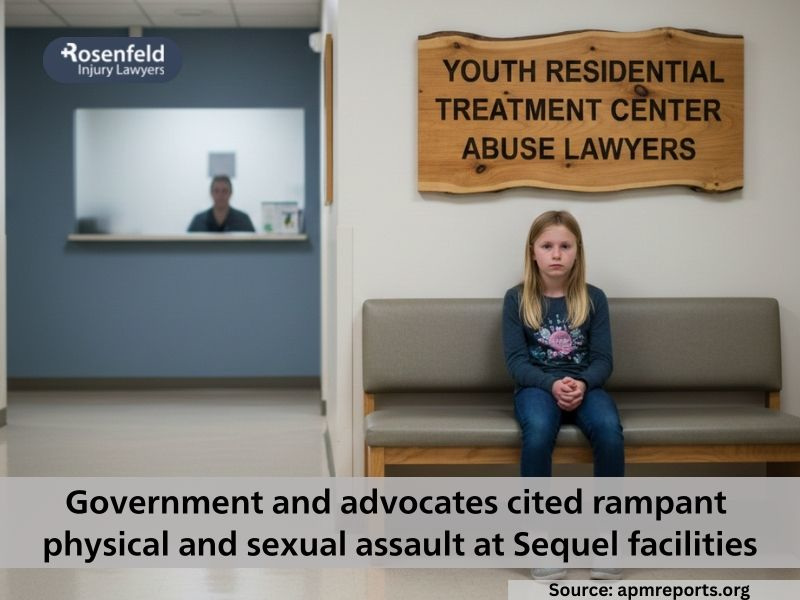
Victims of abuse at Sequel Youth and Family Services may be entitled to financial compensation for their injuries and damages through legal action. One source cited by NBC News described Sequel Youth and Family Services locations as a “profitable death trap.” Investigations have reviewed tens of thousands of documents and reports, highlighting the widespread nature of sexual and physical abuse within Sequel facilities.
If Sequel Youth Services harmed you, you deserve compensation. Our attorneys fight for justice on behalf of young people and their families who Sequel services providers have mistreated. With the help of our youth residential treatment center sexual abuse lawyers , you can receive compensation for harm done by these programs, helping you begin a new life abuse-free.
About Sequel Youth and Family Services and Residential Treatment Facilities
Sequel Youth & Family Services is part of the “troubled teen industry.” Sequel Youth and Family Services is a for-profit operator of behavioral healthcare facilities for children and youth in the United States. As a family services LLC, it is involved in the regulation and operation of Sequel facilities, which have faced scrutiny over abuse and legal actions.
This industry consists of youth residential treatment facilities meant to treat children with behavioral problems through options like therapeutic boarding schools, drug rehabilitation centers, wilderness programs, and religious institutions. These troubled youth may include foster children, kids placed by their parents, or other children convicted of a crime.
Sequel facilities provide residential and therapeutic services to troubled kids. Founded in 1999 by former employees of Youth Services International, Sequel Youth and Family Services is headquartered in Huntsville, Alabama, and operates more than 40 facilities in more than 15 states.
Sequel Youth Services was a major player in the family services industry. The organization operated 35 residential centers, therapeutic boarding facilities in 16 states, and outpatient programs.
The government funds Sequel’s programs. Sequel often receives government funding to take in youth residents from both the foster care system and the juvenile justice system. Medicaid reimburses Sequel up to $800 per child per day across its programs, resulting in hundreds of millions in annual revenue.
Adam Shapiro, also involved in Youth Services International, owns the organization. His co-founder, Jay Ripley, went on to found Vivant Behavioral Healthcare, which acquired nearly half of all Sequel facilities. Ripley sold his majoritystake in Sequel to private equity firms in 2017 before finding Vivant in 2021, which he used to buy back many of its facilities.
Facilities Operated by Sequel Youth and Family Services
Sequel Youth and Family Services has operated a vast network of youth residential treatment centers across the United States, serving thousands of vulnerable children and adolescents.
These facilities—including residential centers, group homes, and specialized schools—were established to provide mental health treatment, behavioral support, and substance abuse programs for troubled youth.
Many young people placed in Sequel’s care were struggling with complex behavioral challenges, emotional trauma, or family instability, and were in need of a safe, therapeutic environment.
However, numerous reports have revealed a troubling pattern of physical abuse, sexual abuse, and emotional abuse within Sequel’s centers. Facilities such as the Pompano Youth Treatment Center and Lakeside Academy have become synonymous with abuse scandals, where staff and even fellow residents allegedly perpetrated serious harm against those they were meant to protect.
Instead of receiving the mental health treatment and support they desperately needed, many survivors suffered abuse that left lasting emotional and psychological scars.
The company’s treatment programs, which were intended to help young people overcome behavioral challenges and substance abuse, have been widely criticized for prioritizing profit over patient well-being.
This profit-driven approach often resulted in poor supervision, inadequate staff training, and a lack of accountability, creating an environment where abuse could flourish.
For many survivors, the emotional toll of their experiences at Sequel facilities has been profound, with reports of serious harm and long-term trauma continuing to surface. The widespread nature of these abuse scandals underscores the urgent need for reform and greater oversight in youth and family services.
Lawsuits against Sequel Youth and Family Services
Former Sequel Patients Allege Widespread Abuse
In 2024, Anna Claire Bates and Jane Doe filed a lawsuit against Sequel Youth and Family Services on behalf of themselves and others who suffered both sexual and physical abuse while at North Carolina and Alabama facilities.
Bates alleged that Sequel employees at Auldern Academy would use physical restraints and abuse to make students comply and that they were deprived of necessary food while performing hard physical labor.
Jane Doe alleged that she was sexually abused by both a male and female staff member while at the Montgomery Academy in Alabama. She was also placed in solitary confinement and was not able to speak to other students.
Shortly before this lawsuit, Sequel shut down the Auldern Academy in North Carolina, the Clarinda Academy in Iowa, and the Normative Services Academy in Wyoming.
16-Year-Old Boy Dies in Michigan
In 2020, Cornelius Fredericks, age 16, died at Sequel’s Lakeside Academy in Kalamazoo, Michigan, after staff held him down for 10 minutes after he threw a sandwich at a staff member. Despite Fredericks’ clear distress, staff waited 12 minutes to call emergency services, where he died of cardiac arrest at a local hospital.
Three former Sequel employees were charged with child abuse in this incident. While the company vowed to learn from its mistakes, even more cases of alleged abuse surfaced in the aftermath.
After Fredericks’ death, Michigan Governor Gretchen Whitmer banned the Michigan Department of Health and Human Services from placing children at any Sequel facilities. However, NBC News reported that some children were still being sent to out-of-state facilities.
Child Dies by Suicide While at a Sequel Mental Health Facility
In September 2021, Connor Bennett was placed in a Tuskegee facility by the Alabama Department of Human Resources due to behavioral issues. During his six-month stay, Bennett was repeatedly sexually abused by other children, and staff ignored his complaints. While under Sequel care, Bennett escaped the facility multiple times without staff noticing.
Bennett sustained self-inflicted injuries related to self-harm and was sent to Children’s of Alabama in Birmingham, where he died six days later. His mother sued Sequel Youth and Family Services and Vivant Behavioral Healthcare, alleging negligence. If you are representing the estate of a loved one who has died as a result of abuse, you may qualify to file a wrongful death lawsuit against Sequel or at-fault parties.
Before these abuse scandals, the Alabama Disabilities Advocacy Program had sent a letter of concern regarding four Sequel facilities in the state: Sequel Owens Cross Roads, Sequel Tuskegee, Sequel Courtland, and Sequel Montgomery.
Is Sequel Youth and Family Services Known for Physical Abuse Cases?
NBC News released a report based on over 10,000 pages of records from 14 states and hundreds of patient interviews. They found that patients suffered from abuse, physical assault, forced medication, and solitary confinement.
A 41-page report on the Northern Illinois Academy run by Sequel facilities found that staff were not put through mandatory child abuse training, improperly restrained patients, and failed to report abuse. The Centers for Medicare & Medicaid Services revoked Northern Illinois Academy’s certification in 2020, and the report urged that the facility be closed.
Numerous Sequel facilities have been cited for failing to protect patients. However, some Alabama facilities passed regular inspections despite patients raising awareness of their suffering.
In a report on Sequel, Birmingham researcher James Delano noted that Sequel facilities practiced “Group Ignorance,” in which residents were not allowed to be within 10 feet of another resident.
They were only allowed to interact with others during billable services, such as group therapy. The article notes that at least one Sequel resident attempted suicide because of this psychological abuse.
The Equal Justice Initiative, an organization committed to reforming the justice system, reported on the shocking conditions found in several Alabama facilities. Blood smeared on windows, feces on the floor, roach infestations, and missing tiles were some of the serious violations noted by investigators.
Children in the facilities reported physical punishment, including being thrown headfirst into walls, slammed into the floor, or being hit by staff. They were forced to sleep on thin mats laid atop concrete sheets. Some even stated that staff encouraged them to kill themselves.
This abuse was not limited to only Illinois or Alabama.
The Tennessee Department of Children’s Services received a tip in 2019 about the Kingston Academy, where children were restrained face-down, and the building had serious sanitation issues, including doors held up by two-by-fours and crumbling walls. The department removed 18 children, and Sequel shut down the facility.
Also in 2019, a riot broke out at Sequel’s Red Rock Canyon School in Utah, where a child was stabbed with a kitchen knife, and blood was sprayed on the walls of the timeout room.
New allegations of sexual conduct and widespread violence spurred a report by the state of Utah into the facility. Officials found several incidents of dangerous restraints, including one resident choking another to the point of unconsciousness. Shortly thereafter, Sequel permanently closed the facility rather than attempt to remedy the harm.
What are Your Rights as a Sexual Abuse Victim?
If you were harmed in Sequel facilities, you have the right to seek compensation, and our attorneys can help. We will thoroughly investigate your allegations, including finding reports, citations, eyewitness testimony, and communications.
After identifying the strength of your case and calculating potential damages, we will negotiate with Sequel for a settlement. This process begins with a demand letter stating the amount we believe your case is worth.
In many cases, it’s possible to settle a case out of court. However, facilities may refuse a fair agreement, and we will file a lawsuit against them. This involves filing documents, depositing funds, sharing resources with the defendant’s legal team, and presenting your case at trial.
Our trauma-informed law firm will work to minimize trial stress. We will speak with Sequel’s attorneys on your behalf and keep you involved as much as possible so you feel in control. Additionally, we will provide you with local resources to support your recovery.
What Laws Govern Sequel Youth & Family Services Sexual Abuse Lawsuits?
Sexual abuse lawsuits involving Sequel facilities are governed primarily by state civil law, along with state licensing, child welfare, and treatment regulations that apply to youth behavioral health facilities. Because Sequel facilities served minors placed in residential institutions, group homes, and juvenile programs, courts often apply heightened duties of care and supervision.
State Civil Laws Governing Youth Residential Facility Abuse
Civil suits against Sequel facilities and therapeutic boarding schools typically assert state law claims such as:
- Sexual assault or abuse
- Negligence
- Negligent hiring, supervision, or retention
- Failure to protect minors
- Premises liability
- Breach of statutory duty
Residential youth facilities owe a non-delegable duty of care to protect children in their custody. When abuse is committed by staff members, contractors, or other residents, civil liability may arise if the facility failed to implement adequate supervision, ignored warning signs, or failed to respond to prior complaints.
State Licensing and Child Welfare Laws
Sequel facilities operate under state child welfare and behavioral health licensing laws that impose mandatory standards for staff screening, supervision, incident reporting, and resident safety. Violations of these regulations can support civil claims by establishing negligence or negligence per se.
For example:
- Many states require criminal background checks and ongoing monitoring for staff working with minors.
- States impose mandatory incident reporting obligations when abuse or exploitation is suspected.
- Licensing agencies may require immediate removal of accused staff and notification to child protective services.
Failure to comply with these requirements can form the basis of civil liability when abuse occurs.
Are There Federal Laws Supporting Civil Claims?
While most Sequel lawsuits proceed under state law, federal civil laws may also apply in certain cases.
42 U.S.C. § 1983 may allow civil claims when abuse occurs in facilities operating under state authority or pursuant to government contracts, and when constitutional rights are violated through deliberate indifference.
Additionally, facilities receiving federal funding may be subject to civil rights protections prohibiting sex-based abuse or discrimination in programs receiving federal financial assistance.
Consent and Authority
Children and adolescents placed in treatment facilities cannot legally consent to sexual activity with staff members. Courts consistently recognize that staff in youth treatment programs occupy positions of complete authority and control, making any sexual contact inherently coercive.
Even where abuse involves older adolescents, civil courts treat sexual contact between residents and staff as a per se abuse of power, supporting liability against both the individual perpetrator and the facility.
Institutional Liability and Corporate Responsibility
Sequel Youth & Family Services operated multiple facilities across different states, often under a centralized corporate structure. Civil suits frequently examine whether corporate leadership:
- Failed to implement system-wide safety policies
- Ignored patterns of abuse across facilities
- Allowed known offenders to remain employed or be transferred
- Failed to train staff on abuse prevention properly
Both local facilities and parent corporate entities may face civil liability depending on the degree of control, oversight, and policy enforcement. Lawyers will examine the abuse suffered and help determine if the facility is liable.
What is the Statute of Limitations?
The statutes of limitations for child sexual abuse vary significantly by state. Some states have recently updated their legislation to provide longer timeframes for victims to file suits, recognizing that some victims may not disclose until later.
Because the statute of limitations differs in each state, you must contact a qualified attorney as soon as possible. Our firm can ensure you receive justice to the fullest extent of the law.
Government Oversight of Sequel Youth and Family Services
The role of government regulators in overseeing Sequel Youth and Family Services has come under intense scrutiny in recent years. Despite numerous reports of alleged abuse, neglect, and serious psychological harm within Sequel’s youth centers, government oversight has often been criticized as inadequate and ineffective.
Even as abuse scandals made headlines and civil suits mounted, Sequel continued to receive government funding and operate centers across the country.
High-profile incidents, such as the tragic death of Cornelius Frederick at Lakeside Academy, have raised serious questions about the effectiveness of government regulators in protecting vulnerable children and those who have suffered abuse.
In some cases, states have responded by revoking contracts or banning placements at Sequel facilities. Still, in others—such as Alabama—government agencies have continued to fund and support the company’s programs despite ongoing concerns.
This lack of consistent and effective oversight has allowed a culture of abuse and neglect to persist within Sequel’s residential facilities. Many families and advocates argue that government regulators failed to act on numerous reports of abuse, enabling Sequel to prioritize profits over the safety and well-being of the children in their care.
As civil lawsuits against Sequel Youth and Family Services continue to grow, it is clear that a dedicated team of regulators and lawmakers is needed to hold the company accountable and ensure that Sequel-operated youth residential centers provide the protection and support that vulnerable children and adolescents deserve.
Contact Us to Take Legal Action
Our team holds abusive facilities like Sequel Youth and Family Services accountable for their failures to care for those they are required to protect. We work on a contingency-fee basis, meaning you owe us nothing unless we secure compensation for you.
We can help if you or a family member would like to file an abuse lawsuit against these dangerous facilities. To schedule your free consultation with an accomplished sex abuse lawyer, contact Injury Lawyer Team at or use our online consultation request form. Your request is confidential under the attorney-client privilege.
All content undergoes thorough legal review by experienced attorneys, including Jonathan Rosenfeld. With 25 years of experience in personal injury law and over 100 years of combined legal expertise within our team, we ensure that every article is legally accurate, compliant, and reflects current legal standards.