

Sexual Abuse and Assault Injury Lawyers


Winnebago County Juvenile Center Sexual Abuse Lawsuit
The experience of Winnebago County Juvenile Center sexual abuse is a travesty, and no one should have to face the aftermath alone. At Injury Lawyer Team, we are here to support survivors in Winnebago County.
Our Illinois youth detention center sexual assault attorneys are committed to standing up for your rights and making sure your voice is heard. From our initial consultation to the resolution of your case, we will work tirelessly to seek justice and provide the guidance and legal representation you need.
At Injury Lawyer Team, we have extensive experience and success in handling sex abuse cases, including those involving sex abuse in the Winnebago County Juvenile Detention Center. When you choose our firm, you can expect:
- Proven Track Record: Our firm has a strong track record of securing significant settlements and verdicts for survivors of sex abuse. We have successfully fought for justice on behalf of our clients, holding responsible parties accountable for their actions.
- Compassionate and Dedicated Legal Team: Our team of compassionate professionals understands the profound impact of sex abuse and is committed to providing the support and legal guidance survivors need. We approach each case with empathy, treating our clients with the utmost respect and sensitivity throughout the legal process.
- Nationwide Representation and Resources: With a nationwide reach, we represent survivors across the country. Our firm has the resources, network, and expertise necessary to handle complex abuse cases in any jurisdiction.
- Commitment to Confidentiality and Sensitivity: We understand that privacy and confidentiality are critical in cases involving sex abuse. Our firm maintains the strictest confidentiality standards, prioritizing our clients’ well-being and privacy.
Understanding How Sexual Abuse Occurred at Winnebago County Juvenile Detention Center
At the Winnebago County Juvenile Detention Center, breakdowns in oversight and accountability within Illinois juvenile facilities can place detained youth at serious risk, leading to profound emotional trauma for those harmed while in the county’s care.
Overview
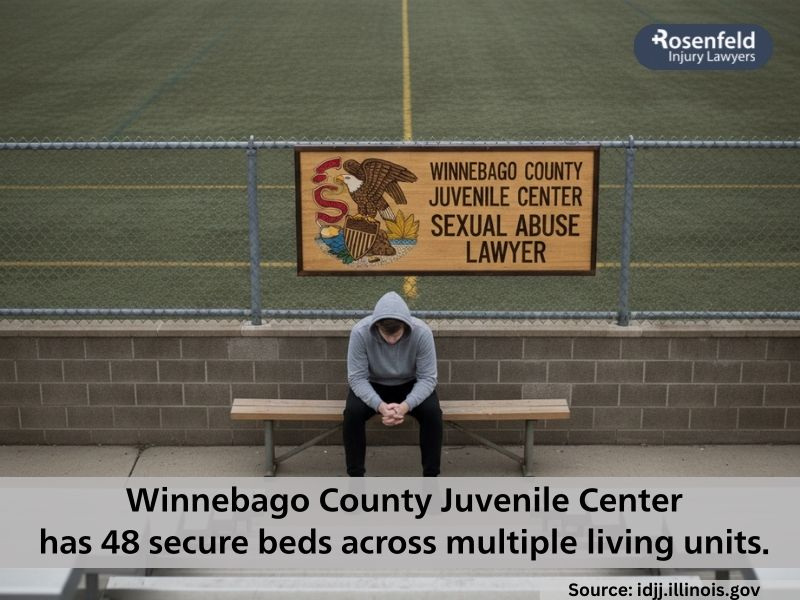
Winnebago County Juvenile Detention Center, established in the 1950s and currently located on Northrock Drive in Rockford, Illinois, strives to ensure the safety and well-being of youth in its care.
The facility offers a range of programs designed to meet legal requirements and support the rehabilitation of young individuals. Unfortunately, abuse occurs at these facilities and is not uncommon.
PREA-Related Allegations and Efforts to Address Concerns
In 2023, Winnebago County Juvenile Detention Center reported a total of 31 allegations at their juvenile facility related to the Prison Rape Elimination Act (PREA), including sex abuse and harassment.
Investigations into these allegations substantiated 4 cases, while 20 remained unsubstantiated. It is important to note that these allegations represent reported cases, and unsubstantiated outcomes do not definitively indicate that abuse or harassment did not occur.
Winnebago County Juvenile Detention Center Receives Federal Accreditation
In March 2025, the Winnebago County Juvenile Detention Center announced it had successfully passed a rigorous Prison Rape Elimination Act (PREA) audit, earning federal accreditation as one of only a handful of county facilities in Illinois to do so.
This accreditation reflects the center’s efforts to strengthen safeguards against sexual abuse and harassment by implementing national PREA standards, including enhanced staff training, expanded direct supervision, clearer reporting channels, and resident education, under the oversight of certified PREA auditors.
What Are the Common Forms of Sexual Abuse Happening in Illinois Juvenile Detention Centers?
In juvenile detention centers, various forms of misconduct can occur, posing serious risks to the well-being and safety of the young individuals involved. Below are some examples of misconduct that have been reported:
- Inappropriate touching by staff or residents
- Coerced sexual acts
- Non-consensual sexual contact between residents
- Sexual harassment, including verbal abuse or threats
- Invasive medical treatment or unnecessary searches
- Staff exploiting authority to solicit sexual favors
- Exposing minors to sexually explicit material
- Invasion of privacy during showers or restroom use
- Grooming behaviors by staff or older residents
Perpetrators of such misconduct within youth detention facilities typically include staff members or other (often older) residents.
What Are the Consequences of Sexual Abuse in Juvenile Detention Facilities?
Within environments where residents already face vulnerability, such as juvenile detention facilities, the ramifications of sex abuse can be devastating. Individuals in these facilities are far from home without any familial support on a day-to-day basis, meaning they rely solely on the people who run juvenile detention facilities, creating a significant power differential.
Acts of abuse inflict significant physical, mental, and emotional harm, with both immediate and enduring effects on the lives of those affected.
Abuse can result in immediate trauma, causing physical and psychological distress. It often leads to feelings of powerlessness, fear, and confusion. It can also bring about shame and self-blame.
The long-term consequences of sex abuse can manifest in various detrimental ways, including the development of post-traumatic stress disorder (PTSD), heightened anxiety, persistent depression, self-harm and substance abuse, and difficulties with friendships and romantic relationships. The repercussions of abuse are far-reaching and demand attention and intervention.
Who Is Eligible to File a Juvenile Detention Center Sexual Abuse Claim?
When it comes to filing a claim for sex abuse in a juvenile detention center, minors have the opportunity to take action. With the guidance and support of their parents or guardians, minors can file a claim to seek justice and hold those responsible accountable.
Waiting until age 18 is also an option, and victims can file on their own. At Injury Lawyer Team, we are dedicated to assisting you throughout the process and providing the legal support you need.
What Laws Govern Sexual Abuse in Illinois Juvenile Detention Facilities?
Sexual abuse claims involving Illinois youth detention centers are governed by a combination of state and federal laws designed to protect children, safeguard the legal rights of detained youth, and hold institutions accountable for sexual misconduct, physical abuse, and inadequate supervision.
Under the Juvenile Court Act (705 ILCS 405), Illinois law emphasizes rehabilitation, public safety, and due process for minors in the juvenile justice system, including those awaiting trial. Facilities operating under this framework have a legal duty to provide proper care and implement proper safeguards to prevent abuse. When a child is sexually abused or sexually assaulted, failures under this statute may support a civil claim against responsible entities.
The Unified Code of Corrections (730 ILCS 5/3-15-2) further outlines detention administration duties, requiring secure staffing, training, and supervision. Violations, such as ignoring abuse allegations or failing to discipline staff, can expose facilities and supervising agencies, including the Illinois Department of Juvenile Justice, to liability through civil lawsuits aimed at preventing future abuse.
Illinois also mandates reporting under the Abused and Neglected Child Reporting Act (325 ILCS 5). Staff, medical providers, and administrators in Illinois facilities must report suspected abuse to child protection and family services. Failure to report can lead to criminal charges, strengthen civil claims, and support subsequent legal filings.
At the federal level, 42 U.S.C. § 1983 allows survivors to pursue justice when county officials violate constitutional rights through deliberate indifference. These cases can address systemic failures that endanger future detainees and reinforce accountability across the legal system.
Our law firm works with survivors and advocacy groups to help families file lawsuits, pursue accountability, and access a free and confidential consultation to understand their options and protect youth from future abuse.
The statute of limitations for filing a lawsuit in Rockford, IL has undergone a significant change over the years. There is now no civil statute of limitations for cases involving sexual abuse of children. This means that survivors of such abuse can seek legal recourse at any time.
However, it is crucial to act promptly for cases of abuse that occurred many years ago, as they may still have certain deadlines. To determine the specific deadline in your case and explore your legal options, we strongly recommend contacting a lawyer.
Discuss Your Legal Options With Our Juvenile Detention Center Sexual Abuse Lawyers
Injury Lawyer Team is here to provide you with the necessary legal support and guidance to hold the responsible parties accountable. Here’s how an Illinois sexual abuse attorney can assist you:
We always provide a free and confidential initial consultation. We will listen to what happened and, together, decide whether it is in your best interest to proceed with the legal process.
We leave no stone unturned when it comes to investigating your case. A youth detention center sexual assault attorneywill conduct a thorough investigation, gathering all relevant evidence that will support your claim.
This often includes police reports, medical records, witness testimony, surveillance footage, internal facility reports, and anything else that will help us prove you suffered abuse at the hands of the facility.
Our lawyers will guide you through the lawsuit filing process and handle all paperwork and legalities. We will explain the legal procedures involved and help you understand the potential outcomes of your case. Our goal is to ensure you are well-informed and prepared throughout the legal process.
We strive to resolve matters through settlement negotiations with juvenile detention centers and the at-fault parties, as this is often quicker and far less stressful than going to trial.
We will advocate on your behalf to secure a fair settlement that compensates you for the harm you have suffered. If negotiations don’t provide you with an offer that you’re happy with, we are fully prepared to represent you at trial.
When seeking compensation for victims of sex abuse in juvenile detention centers, various types of compensation may be available. The most common types of compensation awarded through jury trials or offered as a settlement include:
- Loss of earning capacity
- Punitive damages
Every case is different, and the amount of compensation you will be entitled to is dependent on your circumstances. However, some factors that influence what you can expect from juvenile detention centers and other perpetrators include the following:
- Nature and severity of abuse
- Physical and emotional impact
- Duration of abuse
- Economic losses
- Circumstances of the case
At Injury Lawyer Team, we understand that experiencing sex abuse in juvenile detention centers is a devastating experience. During this difficult time, we want to assure you that we are here to help in any way we can.
While we understand that no amount of money can erase the pain you have suffered, we are committed to seeking the compensation you deserve so you can focus on healing.
Call us or fill out our online contact form to schedule a free consultation with a sexual assault lawyer.
All content undergoes thorough legal review by experienced attorneys, including Jonathan Rosenfeld. With 25 years of experience in personal injury law and over 100 years of combined legal expertise within our team, we ensure that every article is legally accurate, compliant, and reflects current legal standards.